Dragon
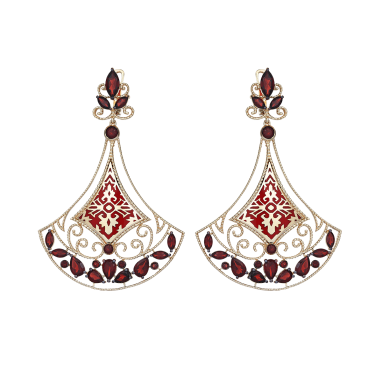
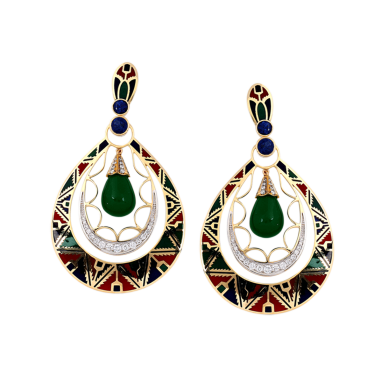
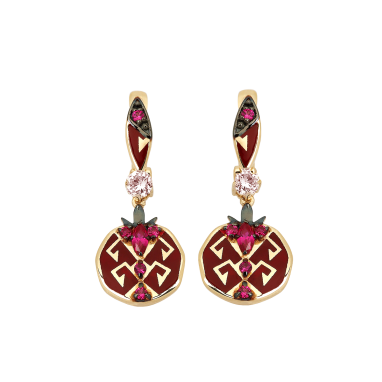
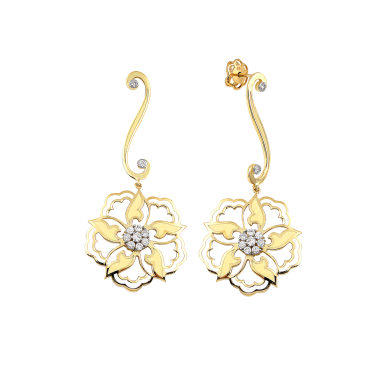
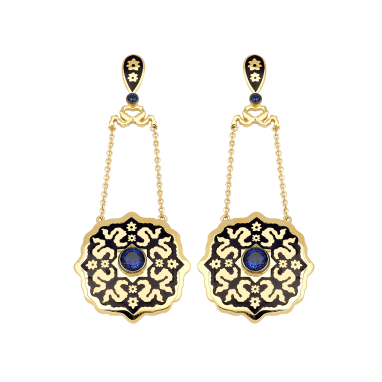
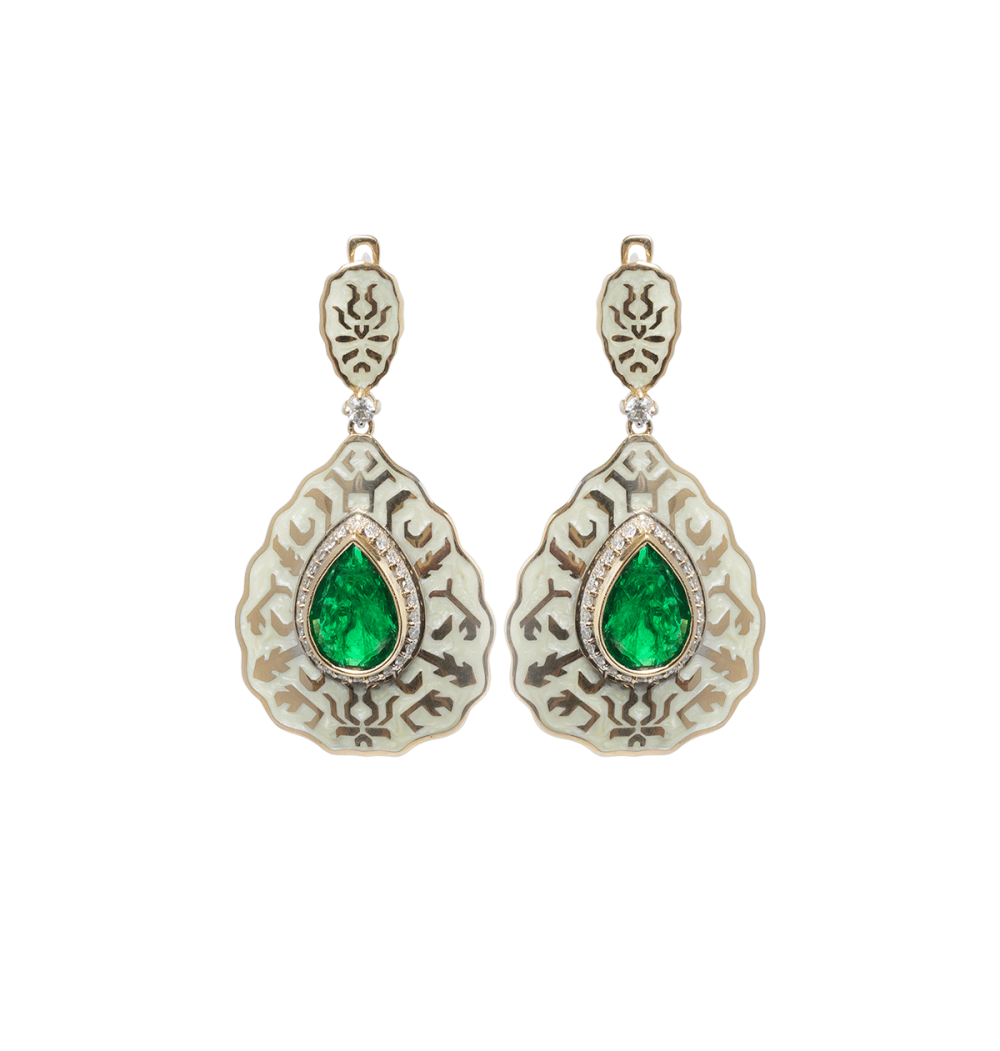
The design of these earrings draws inspiration from the motifs of the historic Azerbaijani rugs known as “Ajdahaly” or “Khatai.” These rugs were primarily woven in Karabagh and possibly in Shirvan and Kuba between the 16th and 18th centuries. Textile fragments with dragon motifs, dating back to the Ilkhanid Period (13th-14th centuries), have survived.
The renowned “Dragon & Phoenix carpet” from the Meiser Collection, currently in the Berlin Museum, symbolizes divine immortality and the triumph of eternal life. The phoenix, soaring above the ‘S’-shaped divine dragon, is a symbol of potent and auspicious powers. This rug is believed to have been created by the Karakoyunlu – Akkoyunlu tribes in the 15th century, possibly in Nakhchivan or Kazak.
In Azerbaijani decorative applied arts, the dragon motif alone represents positive energy and may also symbolize water sources in Azerbaijani folk literature. In ancient Turkic mythology, the dragon “Büke” or “Evren” symbolizes strength and power. It is believed that dragons still inhabit the Tian Shan/Tengri Tagh and Altay mountains in mountainous Central Asia. Historical sources mention a “Dragon City” of the ancient Huns. Both pile and flatwoven carpets from the Safavid Period feature dragon motifs as well.
Description
Description
Types: 14K Gold
Stone: Diamond
Color: White
Gender: Woman